When Human Noise Angered the gods: Atrahasis and the God Who Judges Evil
Atrahasis says the gods sent the flood because humanity became too noisy. Genesis reveals a holy God judging violence and saving Noah by grace.
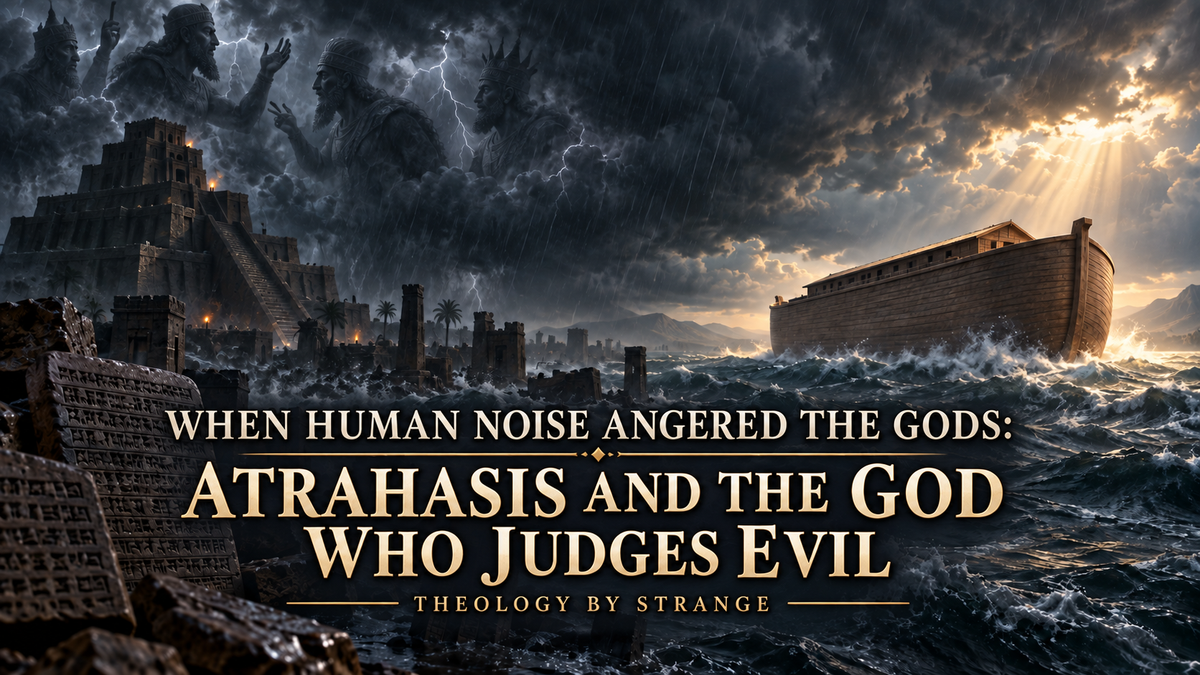
The story of Atrahasis begins with tired gods and ends with a flooded world. Between those two points, humanity becomes a problem the gods can no longer manage. People multiply, their noise grows, and the god Enlil can no longer rest. After earlier attempts to reduce the population fail, the gods decide to send a flood.
That may sound familiar to anyone who has read the account of Noah. Both stories include a devastating flood, a chosen survivor, a large vessel, preserved life, and a sacrifice after the waters subside. Yet beneath those surface similarities are two very different explanations of God, humanity, sin, and judgment.
In Atrahasis, the flood comes because human beings have become an annoyance. In Genesis, the flood comes because human beings have filled the earth with corruption and violence. One story imagines gods who want relief from humanity. The other reveals the holy God who judges evil, preserves a family by grace, and binds Himself to His creation through covenant.
That difference matters. The reason for judgment tells us something about the character of the one who judges.
THE PROBLEM IN ATRAHASIS: HUMANITY WILL NOT BE QUIET
Atrahasis is an ancient Babylonian work preserved on cuneiform tablets. The best-known edition was reconstructed and translated by W. G. Lambert and A. R. Millard in Atra-Hasis: The Babylonian Story of the Flood. Stephanie Dalley also provides an accessible translation in Myths from Mesopotamia.
These books are valuable historical sources for understanding ancient Mesopotamian religion, but Atrahasis is pagan literature, not inspired Scripture. Its many gods and its account of creation do not agree with the truth God has revealed in His Word.
Earlier in the story, the lesser gods rebel because they are tired of hard labor. The gods then create human beings to take over that work and supply them with food through sacrifice. Humanity succeeds too well. The population grows, and human noise keeps Enlil awake.
Enlil first tries to reduce humanity through disease. When that fails, he sends drought and famine. The god Enki repeatedly helps Atrahasis guide the people through these disasters. Finally, the gods decide upon a flood that will wipe humanity away. Enki secretly warns Atrahasis, who builds a boat and survives with selected people and animals.
The “noise” in Atrahasis may involve more than loud sound alone. Scholars have connected it with population growth and the unrest produced by a crowded world. Even so, the story does not accuse humanity of universal moral corruption as Genesis does. Human beings disturb the gods, and Enlil responds as a ruler who has lost patience with an unwanted problem.
The story’s view of human purpose darkens the tragedy. People were created to relieve the gods of work. Once those workers become troublesome, the gods try to reduce or destroy them. Human life is useful, but it is not sacred in the biblical sense. The gods need humanity’s labor and sacrifices, yet they also resent humanity’s presence.
This is not the God of Scripture.
THE PROBLEM IN GENESIS: HUMANITY HAS BECOME VIOLENT AND CORRUPT
Genesis does not describe God as losing sleep because people have become too loud. It tells us that God sees what human beings have become:
“The LORD saw that the wickedness of man was great in the earth, and that every intention of the thoughts of his heart was only evil continually” (Genesis 6:5, ESV).
The problem is moral. Sin has spread through human thoughts, desires, relationships, and societies. Genesis soon adds that “the earth was corrupt in God’s sight, and the earth was filled with violence” (Genesis 6:11, ESV). The repeated emphasis on corruption and violence explains why judgment comes.
This distinction is easy to miss if we reduce both accounts to a simple outline about a man surviving a flood. The biblical account is not mainly about a natural disaster or heaven's frustration. It is about the holy Creator confronting the evil that His creatures have chosen.
God’s judgment is not a sudden fit of irritation. It follows generations of escalating sin. Adam and Eve rebel against God. Cain murders Abel. Lamech boasts about violence. By Genesis 6, human wickedness has grown until violence fills the earth. The flood belongs to that moral story.
Gordon J. Wenham, in Genesis 1–15, notes that Genesis's language portrays a creation ruined by human corruption. Victor P. Hamilton likewise explains in The Book of Genesis: Chapters 1–17 that the flood is God’s response to a world in which evil has become pervasive. The text does not present humanity as innocent victims of a temperamental deity. It presents a guilty world before its righteous Judge.
GOD IS GRIEVED, NOT MERELY ANNOYED
Genesis 6:6 says that the Lord regretted that He had made man on the earth and that “it grieved him to his heart.” This does not mean God discovered He had made a mistake or lacked knowledge of what would happen. Scripture consistently teaches that God knows the end from the beginning and accomplishes His purposes (Isaiah 46:9–10).
The language shows us God’s real sorrow over human rebellion. Sin is not merely inconvenient to Him. It offends His holiness and grieves the Creator who made humanity good. God is not emotionally detached from the destruction people bring upon themselves and one another.
This is another sharp difference from Atrahasis. Enlil is disturbed because human beings interfere with divine comfort. The Lord is grieved because His image-bearers have turned from Him and filled His world with violence. One response is self-centered annoyance. The other is holy opposition to evil joined with genuine grief over what sin has done.
We should not soften the severity of the biblical judgment. The flood is terrifying. God takes sin more seriously than we naturally do. Yet its severity is not evidence of pettiness. A God who remained indifferent while violence consumed the earth would not be good. Divine patience does not mean that evil will be tolerated forever.
THE JUDGE OF THE EARTH DOES WHAT IS RIGHT
The Bible repeatedly connects God’s judgment with His righteousness. Abraham later asks, “Shall not the Judge of all the earth do what is just?” (Genesis 18:25, ESV). The expected answer is yes. God never judges from ignorance, selfishness, exhaustion, or loss of control.
This does not remove every difficult question we may have when reading the flood account. Scripture does not ask us to pretend judgment is pleasant. It asks us to begin with the character of the Judge. The God who sends the flood is the God who created life, warned of coming judgment, preserved Noah, remembered those in the ark, and established His covenant afterward.
The gods of Atrahasis are divided and limited. Some mourn the very destruction they approved because they become hungry without human sacrifices. Their decision exposes their dependence and poor judgment.
The Lord, however, does not need food from human hands. Psalm 50:12–13 rejects the idea that God depends upon sacrifices for nourishment. He is the self-existent Creator who gives life and breath to all things (Acts 17:24–25).
God does not preserve Noah because He needs someone to feed Him. He preserves Noah because “Noah found favor in the eyes of the LORD” (Genesis 6:8, ESV). Favor is grace. Before Scripture describes Noah’s faithful obedience, it says God gave him favor.
JUDGMENT DOES NOT CANCEL GRACE
Genesis places one of its brightest statements against one of its darkest backgrounds: “But Noah found favor in the eyes of the LORD.” The world deserves judgment, but judgment is not all God reveals. He also provides a way to be rescued.
Noah is described as righteous and blameless among the people of his generation, and he walks with God. That does not mean he is sinless. The chapters after the flood make that clear. God saves Noah by His favor, and he demonstrates faith through obedient action. Hebrews 11:7 says that Noah built the ark by faith after being warned about events not yet seen.
God then remembers Noah. In Scripture, divine remembrance does not mean God temporarily forgot him. It means God acts faithfully toward the one to whom He has committed Himself. The waters recede, Noah leaves the ark, and God establishes a covenant with Noah, his descendants, and every living creature.
The rainbow is therefore more than a cheerful ending to a frightening story. It is the sign of God’s covenant commitment. The earth remains marked by human sin, but God promises that a flood will never again destroy all flesh. Seasons will continue while the earth remains (Genesis 8:21–22; 9:8–17).
Atrahasis ends with population-control measures intended to prevent humanity from becoming such a problem again. Genesis ends with a covenant. The biblical God does not solve the problem of sin by treating human beings as excess noise. He patiently carries forward His redemptive purpose through Noah’s family and, eventually, through Abraham and the promised offspring.
THE FLOOD POINTS BEYOND NOAH
The New Testament treats the flood as real judgment and as a warning. Jesus compares the unsuspecting world before the flood with the world that will exist before His return (Matthew 24:37–39). Peter calls Noah a “herald of righteousness” and uses the ancient flood to remind readers that God knows how to rescue the godly and judge the unrighteous (2 Peter 2:5, 9).
The lesson is not that God becomes annoyed when people make too much noise. The lesson is that God’s patience should never be mistaken for indifference. Judgment may seem distant, but it is certain. The same God who judged the ancient world will judge evil fully and finally.
Yet Noah’s rescue also directs our attention toward a greater salvation. An ark carried Noah through waters of judgment, but only Jesus Christ can save sinners from the judgment their sin deserves. Christ does not merely warn us to become better people. He bears the curse for His people and rises from the dead so that all who trust in Him receive forgiveness and eternal life.
First Peter connects the days of Noah with Christian baptism, not because water itself saves, but because baptism points to union with the risen Christ and to “an appeal to God for a good conscience” (1 Peter 3:20–22). Our hope is not in a boat, a ritual, or our moral record. Our hope is in Jesus Christ.
At the cross, we see more clearly than anywhere else that God’s judgment is neither petty nor careless. Sin is so serious that the Son of God bore its penalty. Grace is so great that He willingly did so for sinners. The Judge provides the rescue, and the rescue comes at His own cost.
WHY THE DIFFERENCE STILL MATTERS
Ancient flood stories can help us understand the world in which the Old Testament was first heard. Their similarities to Genesis are worth studying honestly. But similarities should not blind us to the theological differences.
Atrahasis presents a world governed by competing gods with needs, limitations, and unstable purposes. Humanity exists to carry their burden. The flood comes when humanity becomes intolerable. Survival depends on one god quietly working against the others' decision.
Genesis reveals one sovereign Creator. Humanity is made in His image, not manufactured to meet a divine deficiency. The flood comes as moral judgment against deep and widespread evil. Noah survives because the one true God graciously provides salvation, and the story moves toward a covenant that embraces future generations and the living world.
The contrast also forces us to examine our own view of God. Do we imagine Him as easily irritated, unpredictable, or reluctant to show mercy? Scripture gives us a better picture. God is patient, but not indifferent. He is compassionate, but not morally careless. He is just, yet He provides refuge for sinners who trust His promise.
The flood account should humble us. We should see the seriousness of sin, the certainty of judgment, and the wonder of grace. The God of the Bible does not destroy because His creatures have interrupted His rest. He judges because evil is truly evil, and He saves because mercy belongs to His character.
Atrahasis leaves humanity living under the uncertain moods of the gods. Genesis leads us toward the God who judges righteously, remembers His covenant, and ultimately opens the only safe refuge in Jesus Christ.
If this study helped you see the difference between ancient mythology and Scripture's message, subscribe to Theology by Strange and become a member. You will receive future studies exploring the Bible, Christian doctrine, and the ancient world while keeping God’s Word at the center.
When the stories of the ancient world leave humanity at the mercy of restless gods, Scripture leads us to the holy God whose justice is never careless and whose grace is never an afterthought. — Zach Strange