The Story Before All Stories
A biblical reflection on Genesis 1, creation, meaning, and why everything begins with God - not chance or culture.
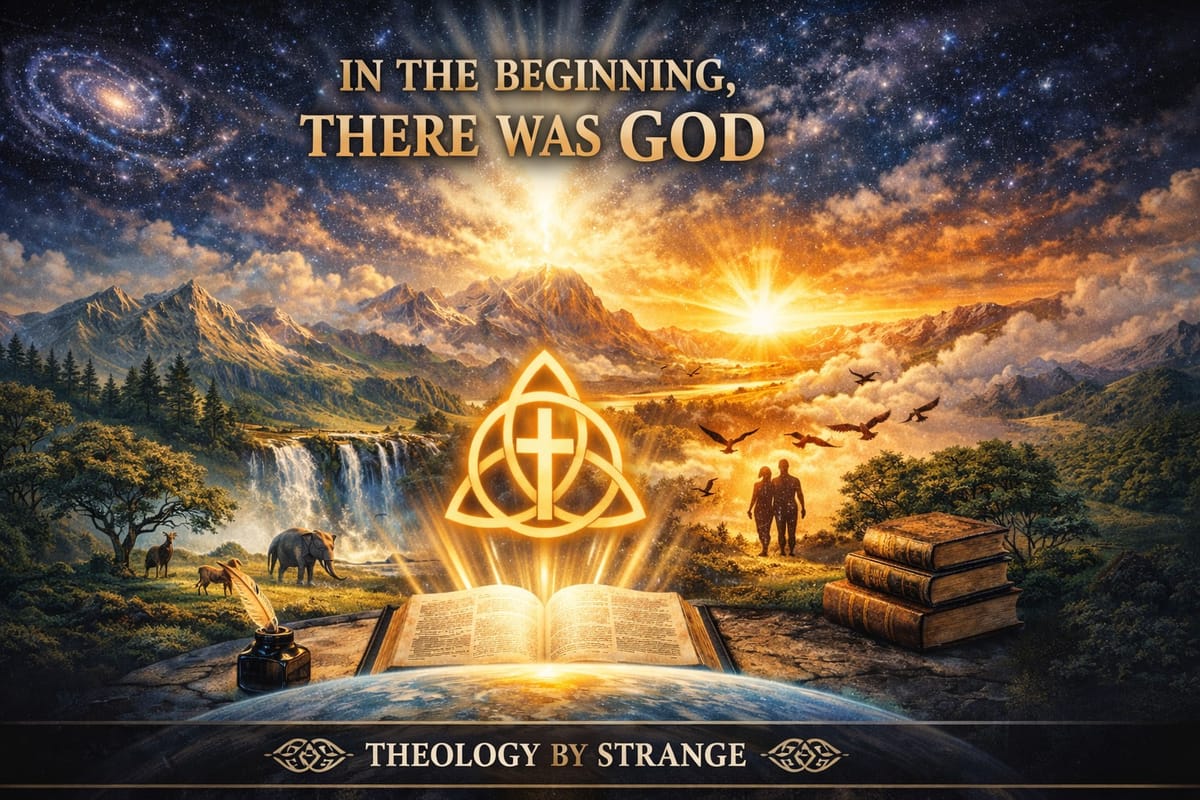
Before there was anything else—before time, before matter, before light—there was God. The Bible does not begin with speculation or theory. Still, with a statement of fact: “In the beginning, God created the heavens and the earth” (Genesis 1:1). That sentence tells us something essential about reality itself. Everything that exists begins not with chance or chaos, but with a personal, eternal Creator.
God did not come into being, and He did not grow into who He is. He simply is. Scripture reveals Him as eternal, unchanging, and entirely sufficient in Himself. Before creation, God existed as Father, Son, and Holy Spirit—three persons in perfect unity and fellowship. He did not create because He was lonely or lacking. He created because He willed to do so. Creation flows from purpose, not need.
This matters more than we often realize. If God were dependent on the world, then the world would shape who God is. But Scripture presents the opposite. God stands before and above creation, and yet He chooses to act within it. Every Christian doctrine—creation, redemption, grace, judgment—rests on this truth. God exists first, and everything else exists because of Him.
Genesis also tells us that the world did not begin in disorder. God creates by speaking, and what He speaks comes into being. Light appears. Boundaries are set. Life fills the earth according to God’s design. The repeated pattern—“And God said…, and it was so”—underscores both God’s authority and His intention. Creation unfolds with rhythm and clarity, not confusion or violence.
This stands in contrast to many ancient creation stories, where the world emerges from conflict between competing gods. Genesis offers something radically different. God does not struggle. He does not compete. He speaks, and creation responds. Humanity is not formed as an afterthought or as servants to unstable deities, but as image-bearers—made deliberately and given dignity from the very beginning (Genesis 1:26–27).
Scripture also makes clear that the story does not start with us. It begins with God. The Bible does not open with humanity searching for meaning, but with God acting in power and purpose. We are not the center of the story. We are part of a story that began long before us and gives meaning to our lives precisely because it does not depend on us.
John Calvin expressed this clearly when he wrote that human beings never come to a proper understanding of themselves unless they first look to God (Institutes of the Christian Religion). When we start with ourselves, our identity becomes unstable and shaped by culture, emotion, or preference. When we start with God, everything else begins to fall into place. He becomes the fixed point by which we understand who we are and why we exist.
Genesis also insists—repeatedly—that creation is good. Light is good. Land and sea are good. Life is good. Humanity is very good (Genesis 1:31). This is important because many worldviews either treat the physical world as meaningless or see it as something to escape. Scripture rejects both ideas. Creation is not disposable, and it is not divine. It is a good gift from a good Creator.
Louis Berkhof noted that God deliberately brought every part of creation into existence, from the smallest creature to the greatest (Systematic Theology). Nothing is random. Nothing is overlooked. Even the order of creation reveals wisdom. God prepares environments before filling them. He establishes structure before life flourishes. Creation reflects the mind of a God who works with intention and care.
Genesis also refuses the idea that God created the world and then stepped away from it. He is not distant or detached. He sustains what He has made. R.C. Sproul famously warned that if even one molecule were outside God’s sovereign control, then none of God’s promises could be trusted (The Holiness of God). Scripture affirms this when it says that Christ “upholds the universe by the word of his power” (Hebrews 1:3).
Human beings hold a unique place in this ordered world. We are made in the image of God, which gives every human life inherent dignity and worth. This dignity is not earned through intelligence, productivity, or usefulness. It is provided by creation. Wayne Grudem explains that part of bearing God’s image includes humanity’s calling to rule and steward the earth under God’s authority (Systematic Theology). We are not owners of the world, but caretakers entrusted with responsibility.
Being made in God’s image also gives us purpose. We are moral creatures, capable of love, worship, repentance, and obedience. We are called to reflect God’s character in how we live and how we treat others. This truth pushes back against both despair and self-exaltation. We are neither meaningless accidents nor autonomous gods. We are created beings with a calling.
The pattern of work and rest established in the creation week further reveals God’s wisdom. God rests on the seventh day not because He is tired, but because His work is complete (Genesis 2:1–3). In doing so, He sets apart time itself and gives humanity a rhythm for life. Rest is not weakness. It is trust. It reminds us that the world does not depend on our constant effort.
G.K. Beale describes God’s rest as the enjoyment of a completed creation (A New Testament Biblical Theology). Sabbath, then, is not merely about stopping activity. It is about delighting in what God has done and trusting Him to sustain what we cannot control. In a culture driven by performance and exhaustion, this rhythm remains profoundly countercultural.
If we misunderstand creation, we will inevitably misunderstand ourselves. Our view of origins shapes our understanding of purpose, morality, and identity. When the Creator is removed, meaning becomes fragile, and truth becomes negotiable. Genesis quietly but firmly resists this. It insists that reality begins with God and only makes sense in relation to Him.
C.S. Lewis once wrote that he believed in Christianity the way he believed the sun had risen—not only because he could see it, but because by it he could see everything else. Creation teaches us how to see. It helps us see the world as purposeful, humanity as dignified, and God as present, sovereign, and good.
This is where the story begins—not just the story of Scripture, but the story of everything. And it is a beginning worth returning to. Everything starts with God—and learning to see that changes everything.
— Zach Strange
If this post helped you think more clearly about Scripture, creation, or your place in God’s world, I invite you to subscribe and become a member of Theology by Strange. Subscribing helps support this work and ensures you won’t miss future reflections rooted in God’s Word and the Christian tradition.