The Blind Eye
A Biblical exploration of spiritual blindness, sin's effect on the mind, and why only God's light can restore true sight.
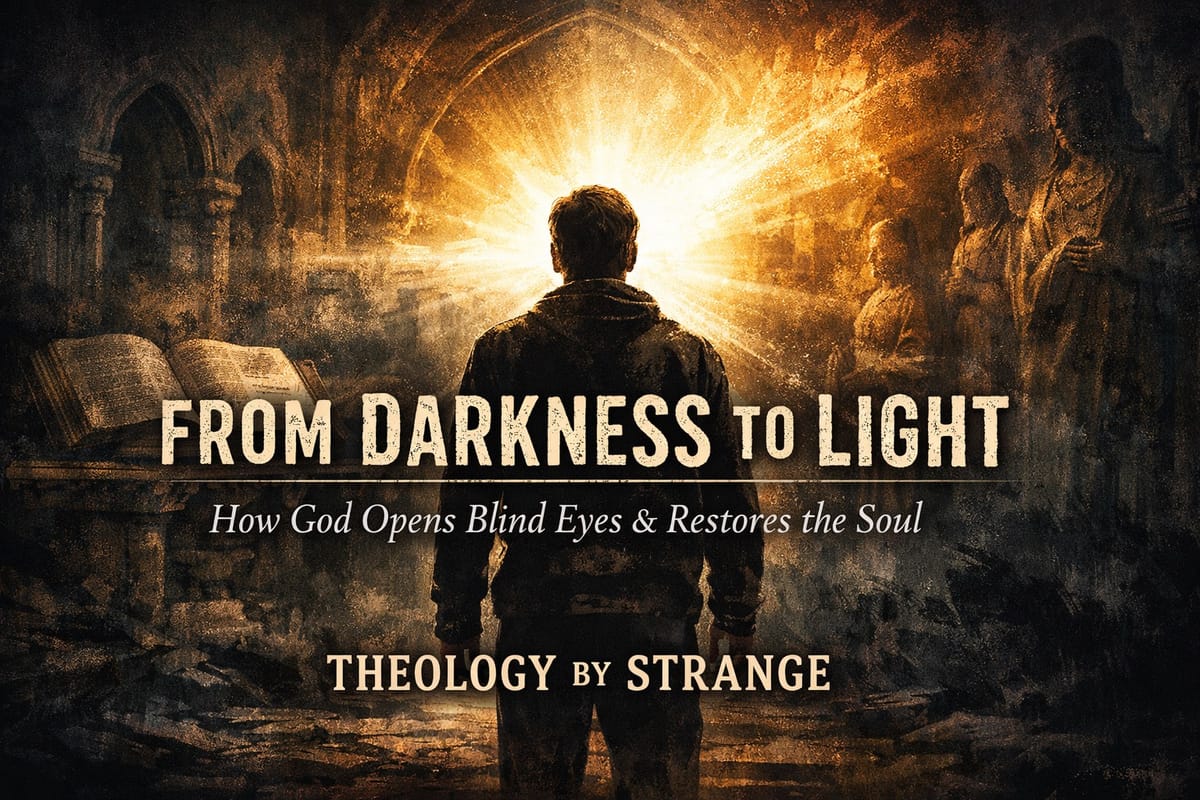
Scripture returns again and again to the image of blindness—not because ignorance is innocent, but because it is active. Spiritual blindness is never just the absence of light. It is resistance. It is the will turning away. The eye is not dark because no light exists. It is dark because the heart, gripped by pride or fear, refuses to look.
Jesus names this condition with unsettling clarity. “This is the judgment, that the Light has come into the world, and people loved the darkness rather than the Light, because their deeds were evil” (John 3:19, NASB). The problem, then, is not that God has failed to reveal Himself. The problem is that the human heart prefers concealment to exposure.
Blindness Is a Moral Condition
When Scripture speaks of blindness, it is not using poetic exaggeration. Sin produces a real deformation of the soul. The mind grows darkened and loses its ability to judge rightly. The heart becomes calloused, less responsive to God’s truth. The affections bend inward, chasing what destroys rather than what gives life. This corruption reaches every part of us.
Theologian Cornelius Plantinga famously described this as the noetic effects of sin—the way persistent rebellion against God damages human thinking itself. Sin does not leave reason untouched. It warps it. Fallen reason is never neutral. It instinctively defends the self, invents excuses, rationalizes evil, and builds entire systems designed to quiet the conscience rather than submit to the truth.
In other words, blindness is not merely tragic—it is culpable.
Ignorance Is Not Neutral
Modern thought often treats ignorance as a simple lack—something education, information, or intellectual refinement can fix. Scripture offers a far more sobering diagnosis. Biblical ignorance is not passive. It is hostile.
Paul does not describe the unrenewed mind as merely uninformed, but as actively opposed. “[We] take every thought captive to obey Christ” (2 Corinthians 10:5, NASB). The implication is clear: thoughts do not naturally drift toward obedience. They resist it.
Because of this moral hostility, spiritual blindness cannot be cured by argument alone. Debate, persuasion, and logic—valuable as they are—cannot penetrate a heart that has already decided it does not want the light. What is needed is not a sharper argument, but a new capacity to see.
Only God Can Open Blind Eyes
Scripture is unambiguous about the remedy. Sight must come from outside us. Only the God who once said, “Let there be light,” can speak light into the human soul. Only the Spirit can open “the eyes of the heart” (Ephesians 1:18), granting a vision fallen reason cannot generate on its own. Until that divine illumination breaks in, even the brightest human insights flicker and fade. Apart from grace, reason may analyze the truth—but it will never love it.
Blindness Always Leads to Idolatry
This is where blindness becomes most dangerous. A. W. Tozer warned that distorted vision inevitably reshapes our worship. “The essence of idolatry is the entertainment of thoughts about God that are unworthy of Him. (The Knowledge of the Holy)."
Idolatry rarely begins with statues or rituals. It begins in the mind. When revelation is ignored, imagination takes over. God is quietly remade into something safer—more manageable, less demanding, more agreeable to our desires. The idol may appear noble. It may dress itself in the language of reason. It may wear the flag of the nation. It may even borrow the vocabulary of Scripture.
But beneath every disguise is the same impulse: self-rule.
John Calvin captured this grim truth with unmatched precision. “The human mind is, so to speak, a perpetual forge of idols. (Institutes of the Christian Religion, I.11.8)." Left to itself, the heart does not drift toward truth. It manufactures substitutes—gods small enough to control and quiet enough not to judge.
Seeing Again
The tragedy of spiritual blindness is not that the light is hidden. It is that the light is rejected. And the hope of the gospel is not that we learn to see better, but that God gives sight to the blind. When He does, illusions collapse. Shadows flee. The soul finally beholds the glory it was created to see—not a god made in our image, but the living God who reveals Himself through His Word.
Truth does not blind the humble—it heals the eyes of those willing to see.
— Zach Strange
If this kind of Scripture-centered, theologically grounded reflection is helpful to you, consider subscribing and becoming a member of Theology by Strange. New posts go out regularly, and membership helps support the ongoing work of writing, teaching, and publishing faithful Christian theology for the church.