How God Makes Himself Known: From Creation to Christ
How God reveals Himself through creation, Scripture, and ultimately Jesus Christ - and why that revelation leaves no one unchanged.
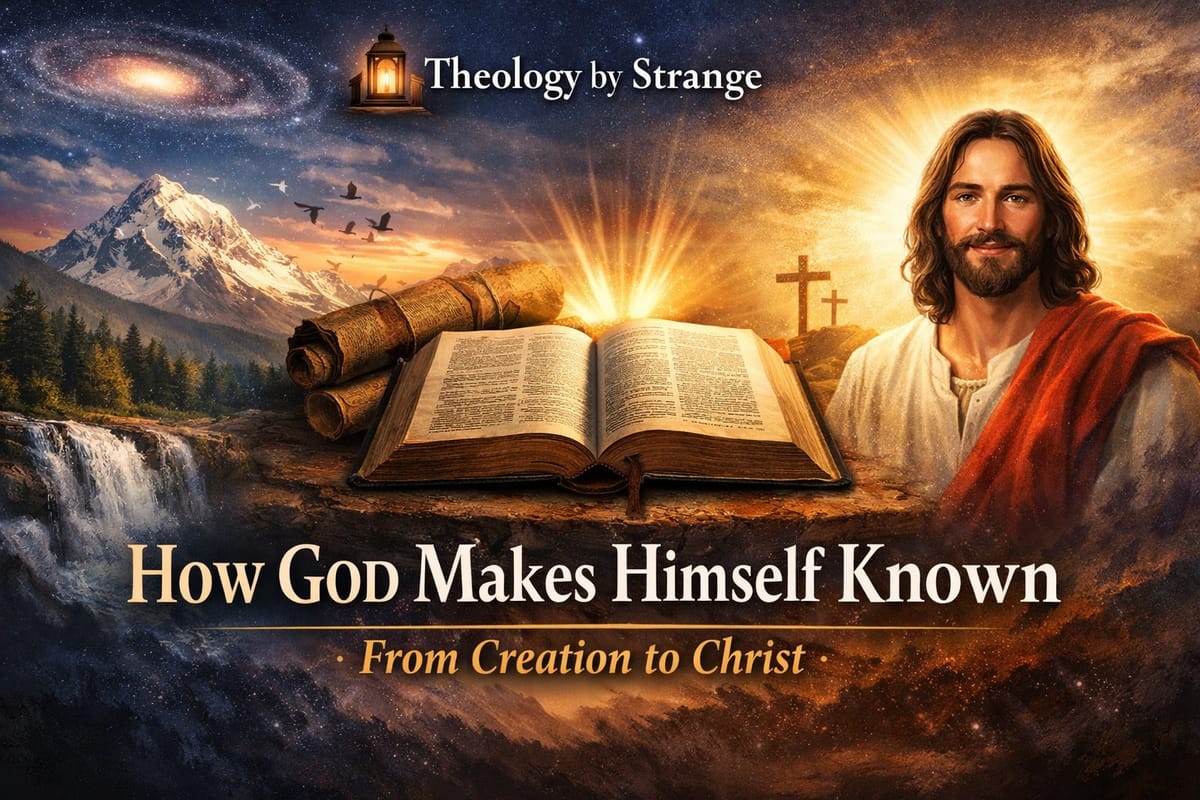
One of the most basic—and most important—questions we can ask is this: How does God make Himself known to us? Is God hidden, distant, or unknowable unless someone stumbles upon the right ideas? Or has He spoken clearly, intentionally, and graciously?
Scripture answers this question with remarkable clarity. God has not left humanity guessing. He has revealed Himself in the world He made, in the Word He inspired, and ultimately in the Son He sent. Each form of revelation builds upon the last, moving us from witness to instruction to fulfillment.
Creation as God’s Universal Witness
Paul teaches in Romans that God’s existence and power are not hidden facts reserved for theologians or scholars. They are evident. The created world itself bears witness to its Maker. Order, beauty, complexity, and coherence all point beyond themselves to an eternal and powerful Creator. For this reason, Paul says humanity is “without excuse.” God has made Himself known in ways that confront every person, in every place.
The psalmist says the same thing poetically. “The heavens declare the glory of God.” Day after day, night after night, creation pours forth testimony. It does not speak with words, yet its message reaches the ends of the earth. The skies announce that the world is not an accident and history is not random. Creation stands as a constant, universal witness to the glory, wisdom, and faithfulness of God.
Theologians have long referred to this as general revelation—God making Himself known through what He has made. It is a real revelation, but it is limited. Creation can tell us that God is, not who He is in saving detail.
Scripture as God’s Clear and Sufficient Word
Where creation witnesses, Scripture speaks.
Paul tells Timothy that “all Scripture is breathed out by God.” These words are not merely religious reflections or human insights about God; they are God’s own Word, given through human authors. Because Scripture comes from God, it carries His authority and His truth.
Scripture teaches, corrects, rebukes, and trains. It does not merely inspire; it instructs. It equips God’s people fully for every good work. Nothing necessary for faith, obedience, or godly living is missing from what God has given in His Word.
Here we see special revelation—God speaking clearly, intentionally, and sufficiently. What creation introduces in broad strokes, Scripture explains with precision. God does not leave His people to interpret the world on their own. He tells us who He is, what He has done, and how we are to live before Him.
Christ as God’s Final and Full Revelation
The opening of Hebrews brings everything into focus. God spoke in many ways throughout history—through prophets, promises, and patterns—but those revelations were partial and preparatory. They pointed forward.
Now, the writer says, God has spoken in His Son.
Jesus Christ is not merely another messenger. He is the message. He is described as “the radiance of the glory of God and the exact imprint of his nature.” To see the Son is to see the Father. In Christ, revelation reaches its climax. What was hinted at before is now made plain.
This means that Christianity is not centered on ideas alone, but on a person. God’s ultimate self-disclosure is not a concept, but the incarnate Son.
The Invisible God Made Visible
John 1:14, 18; Colossians 1:15–20
John declares that “the Word became flesh and dwelt among us.” The eternal Word did not remain distant. He entered history. He lived among us. And John says plainly that the Son has made the Father known.
Paul presses this even further. Christ is “the image of the invisible God.” All things were created through Him and for Him. All things hold together in Him. The Creator steps into His creation, and the invisible becomes visible—not in abstraction, but in the life, death, and resurrection of Jesus Christ.
Here we see the full movement of God’s revelation:
Creation points to Him.
Scripture explains Him.
Christ reveals Him perfectly.
To truly know God, we must ultimately look to Christ. He interprets creation rightly. He fulfills Scripture completely. Apart from Him, God remains misunderstood. In Him, God is known.
Why This Matters
We do not believe because God was hard to find, but because He made Himself known. Faith is not a leap into darkness; it is a response to revelation. God has spoken, and He has done so clearly, graciously, and finally in Jesus Christ.
To ignore creation is to ignore God’s witness.
To neglect Scripture is to reject God’s instruction.
To bypass Christ is to miss God Himself.
But to receive what God has revealed is to step into truth, clarity, and life.
God has not hidden Himself—He has made Himself known.
— Zach Strange